When Your Autistic Husband Seems to Reject Your Love: A Compassionate Word for Wives Living With Cassandra Pain

There is a kind of grief many wives carry in silence. It is the grief of being married, yet feeling profoundly alone.
You may sleep beside someone every night and still feel untouched emotionally. You may pour love into the marriage and feel little coming back. You may explain your needs again and again, only to be met with confusion, defensiveness, distraction, logic, shutdown, or distance.
And after enough years of this, something painful can begin to happen inside you.
You start wondering if you are invisible.
You begin asking yourself questions no wife should have to carry alone:
“Why does the man I love seem unreachable?”
“Why do I feel lonely in my own marriage?”
“Why do my needs seem like a burden?”
“Why do I keep trying so hard and feeling so empty?”
“Am I asking for too much… or too little?”
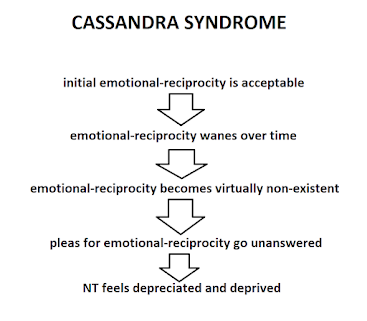
If you relate to this, you may be carrying what many describe as Cassandra syndrome—the emotional pain that can develop when a neurotypical wife repeatedly experiences chronic emotional invalidation, loneliness, and relational confusion in a marriage where one spouse has autistic traits or Autism Spectrum Disorder.
Let’s begin with something important:
Your pain is real.
You are not dramatic.
You are not needy.
You are not “too emotional.”
You are not crazy for longing to feel loved in ways you can actually experience.
You are responding to deprivation.
The Loneliness Few People Understand
One of the hardest parts of this experience is that it is often invisible.
From the outside, others may see:
- a stable marriage
- a hardworking husband
- financial provision
- no obvious abuse
- a decent man doing his best
And because of that, people may not understand why you are hurting.
They may say:
- “At least he’s faithful.”
- “He provides for you.”
- “Men just aren’t emotional.”
- “You expect too much.”
- “Be grateful for what you have.”
Those responses can wound deeply because they miss the real issue.
You are not starving for appearances.
You are starving for emotional connection.
You miss being seen, felt, chosen, responded to, pursued, soothed, cherished, and emotionally held.
Those are not luxury needs.
They are human needs.
When Love Feels Like It Disappears Into a Void
Many wives describe the same cycle.
You reach out gently.
You ask to talk.
You try to reconnect.
You share pain.
You ask for closeness.
You explain loneliness.
And instead of comfort, you receive:
- blankness
- irritation
- practical solutions
- silence
- defensiveness
- avoidance
- “I don’t know what you want”
- “Nothing I do is enough”
- disappearing into hobbies, screens, routines, or work
After enough repetitions, it can feel like your love falls into a hole and never returns.
That kind of chronic one-sidedness can break the spirit of even strong women.
Why This Hurts So Deeply
You are not just upset about one bad conversation.
You are grieving repeated emotional misses.
Every time you reached and were not met… it registered.
Every time you cried alone… it registered.
Every time you were told you were the problem for having needs… it registered.
Every time you watched your husband give more energy to interests than to intimacy… it registered.
Pain compounds.
This is why some wives become anxious, angry, numb, depressed, hypervigilant, or emotionally exhausted.
They are not overreacting.
They are under-nurtured.
You May Have Begun to Doubt Yourself
This is common in Cassandra pain.
Because the deprivation is subtle and chronic, many wives start turning against themselves.
Maybe I’m too sensitive.
Maybe I expect fairy tales.
Maybe all marriages are lonely.
Maybe I should just stop needing anything.
Maybe if I explain it one more time, he’ll finally understand.
That self-doubt can become as painful as the marriage itself.
Please hear this clearly:
Wanting warmth is normal.
Wanting emotional reciprocity is normal.
Wanting responsiveness is normal.
Wanting tenderness is normal.
These desires do not make you high-maintenance.
They make you human.
The Compassionate Truth About Your Husband
Many autistic husbands are not intentionally cruel.
Some genuinely love their wives and feel confused by what is missing.
Some feel overwhelmed by emotional intensity.
Some struggle to read unspoken needs.
Some retreat when they feel they are failing.
Some default to logic when emotion is needed.
Some care deeply but do not know how to express care in ways their wife can feel.
Understanding this can bring perspective.
But perspective should never require self-erasure.
Explaining his wiring does not mean abandoning your reality.
What Happens to a Wife Over Time
When emotional hunger lasts for years, wives often adapt in painful ways.
Some become pursuers:
They beg, protest, lecture, cry, chase, over-explain, and try desperately to create connection.
Some become protectors:
They detach, numb out, stop asking, focus only on kids, become independent to survive.
Some become reactors:
They explode after years of unmet needs and then feel ashamed for their anger.
Some become ghosts:
They remain in the marriage physically but emotionally disappear.
These are not character flaws.
They are coping strategies.
You Need Validation Before Solutions
Before we talk about growth, boundaries, or repair, many wives need one healing sentence:
What you have been living with is emotionally painful.
Sometimes women try to skip straight to strategies while still starving for validation.
No strategy works well when your heart still feels unseen.
So let this land first:
Your exhaustion makes sense.
Your resentment makes sense.
Your grief makes sense.
Your confusion makes sense.
Your longing makes sense.
What You Need Now
Not in theory. In reality.
You may need:
- emotional support outside the marriage
- therapy with someone who understands neurodiverse dynamics
- friendships where you feel alive again
- language for your experience
- boundaries around contempt or neglect
- permission to stop overfunctioning
- rest from carrying the whole emotional load
- clarity about what can improve and what may not
You also may need to grieve the marriage you hoped for.
Grief is painful—but it is cleaner than endless false hope.
If He Loves You But Cannot Love You Well Yet
Some husbands can grow significantly when properly motivated and supported.
Growth may look like:
- learning direct empathy scripts
- scheduled connection time
- check-ins without defensiveness
- repair after shutdown
- clearer affection habits
- accountability instead of excuses
- understanding your loneliness without centering his discomfort
Change is possible in some marriages.
But change usually requires ownership, not just diagnosis.
What You Must Stop Doing
Lovingly, some wives need to stop:
- explaining the same pain 500 ways hoping for magic understanding
- carrying all emotional labor
- shrinking needs to keep peace
- accepting crumbs as a feast
- confusing endurance with intimacy
- abandoning themselves while trying to save the marriage
Your compassion matters.
But compassion without boundaries becomes self-neglect.
What If Nothing Changes?
This is often the question women fear most.
If nothing changes, then what?
Then you tell the truth.
You tell the truth to yourself about what this marriage is costing you.
You tell the truth about what is sustainable and what is not.
You tell the truth about whether your husband is unable, unwilling, or both.
You tell the truth about whether you are surviving or living.
Truth is painful.
But confusion is usually worse.
To the Wife Who Feels Forgotten
You may have become so focused on getting him to see you that you stopped seeing yourself.
Come back to yourself.
Your body matters.
Your joy matters.
Your voice matters.
Your needs matter.
Your life matters.
You are more than the role of waiting to be emotionally chosen.
Final Encouragement
If your autistic husband seems to reject your love, it may not always be malice. It may be wiring, overwhelm, shame, limitation, or lack of skills.
But your pain still counts.
His struggle does not cancel your suffering.
Both realities can be true.
And if you have been carrying Cassandra pain for years, perhaps the next chapter is not only about understanding him.
Perhaps it is finally about caring for you.
 |
| Mark Hutten, M.A. |
Pick Your Preferred Day/Time
Available Classes with Mark Hutten, M.A.:
==> Cassandra Syndrome Recovery for NT Wives <==
==> Online Workshop for Men with ASD level 1 <==
==> Online Workshop for NT Wives <==
==> Online Workshop for Couples Affected by Autism Spectrum Disorder <==
==> ASD Men's MasterClass: Social-Skills Emotional-Literacy Development <==
Individual Zoom Call:
==> Life-Coaching for Individuals with ASD <==
Downloadable Programs:
==> eBook and Audio Instruction for Neurodiverse Couples <==