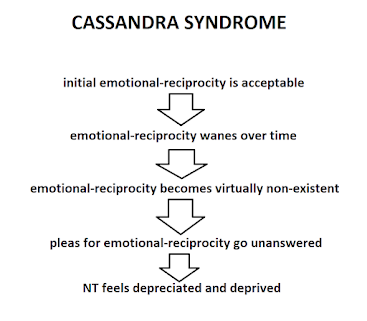
5 most common health problems associated with Cassandra Syndrome:

Women experiencing “Cassandra syndrome” in neurodiverse marriages often live in a prolonged state of emotional deprivation, chronic misunderstanding, hypervigilance, and nervous-system stress. While “Cassandra syndrome” itself is not an official diagnosis, the physical and psychological toll can become very real over time.
Here are the five most common health problems that tend to
emerge:
- Chronic
Anxiety and Nervous System Dysregulation
Many wives describe feeling emotionally unsafe, unseen, or perpetually “on alert.” Over time, the body can remain trapped in a chronic fight-flight state. This may show up as:
- racing
thoughts
- panic
symptoms
- muscle
tension
- difficulty
relaxing
- irritability
- exaggerated
startle response
- emotional
exhaustion
The nervous system often begins anticipating emotional
disconnection before it even happens. Eventually, the body stops distinguishing
between relationship stress and actual danger.
Related conditions can include:
- generalized
anxiety
- panic
attacks
- somatic
symptom disorders
- burnout
- Depression
and Emotional Numbness
A repeated pattern of emotional invalidation, loneliness, or failed repair attempts can slowly erode emotional vitality. Many women report:
- persistent
sadness
- hopelessness
- loss
of identity
- emotional
flatness
- loss
of motivation
- feeling
emotionally invisible
One of the most painful aspects is that the relationship may
look “functional” from the outside while feeling profoundly disconnected
internally. That invisible loneliness can deepen depressive symptoms
significantly.
- Sleep
Disorders and Chronic Fatigue
The body cannot fully rest when the brain remains emotionally vigilant. Many wives develop:
- insomnia
- fragmented
sleep
- nighttime
rumination
- adrenal
fatigue patterns
- chronic
exhaustion
Some describe feeling more emotionally drained after
interactions with their spouse than after demanding workdays. Emotional
unpredictability and lack of co-regulation often disrupt restorative sleep
cycles.
Over time, poor sleep worsens:
- memory
- concentration
- emotional
resilience
- immune
function
- hormone
balance
- Autoimmune
and Stress-Related Physical Illnesses
Long-term relational stress can contribute to systemic inflammation and stress-related physical symptoms. While stress alone does not “cause” every illness, chronic cortisol elevation can worsen vulnerability to:
- autoimmune
flare-ups
- migraines
- IBS
and digestive disorders
- fibromyalgia
symptoms
- chronic
pain
- tension
headaches
- hypertension
Many women notice their physical health improving once
emotional safety, validation, and nervous-system regulation improve.
The body often “speaks” what the relationship environment
suppresses emotionally.
- Trauma
Symptoms / Complex PTSD Patterns
Some wives begin developing symptoms similar to Post-traumatic stress disorder or complex trauma, especially after years of repeated emotional confusion, invalidation, shutdowns, or relational unpredictability.
Symptoms can include:
- hypervigilance
- emotional
flooding
- dissociation
- intrusive
thoughts
- walking
on eggshells
- fear
of bringing up needs
- deep
self-doubt
- loss
of trust in one’s perceptions
A particularly painful dynamic occurs when the wife
repeatedly hears:
- “You’re
overreacting.”
- “That’s
not what I meant.”
- “You’re
too emotional.”
Eventually, she may stop trusting her own emotional reality.
What makes this especially difficult is that many
neurodiverse marriages contain genuine love and good intentions alongside
profound emotional mismatches. The emotional injuries are often cumulative
rather than intentionally malicious. That complexity can keep women stuck
between compassion for their autistic spouse and the deterioration of their own
mental and physical health.
The healthiest interventions usually involve:
- nervous-system
stabilization
- psychoeducation
about neurodiversity
- emotional
validation
- boundaries
- trauma-informed
therapy
- structured
communication systems
- rebuilding
identity outside the relationship dynamic
And importantly: many wives improve significantly once their
experience is finally named, understood, and validated.
 |
| Mark Hutten, M.A. |
Pick Your Preferred Day/Time
Available Classes with Mark Hutten, M.A.:
==> Cassandra Syndrome Recovery for NT Wives <==
==> Online Workshop for Men with ASD level 1 <==
==> Online Workshop for NT Wives <==
==> Online Workshop for Couples Affected by Autism Spectrum Disorder <==
==> ASD Men's MasterClass: Social-Skills Emotional-Literacy Development <==
Individual Zoom Call:
==> Life-Coaching for Individuals with ASD <==
Downloadable Programs:
==> eBook and Audio Instruction for Neurodiverse Couples <==