Beyond The “Man-Child” Label: What Cassandra Wives Are Actually Experiencing In Neurodiverse Marriage

There comes a moment in many neurodiverse marriages when the wife quietly begins asking herself a painful question: “Am I married to an adult emotionally, or am I carrying another child?” Most wives do not arrive at this conclusion quickly. In fact, many fight against the thought for years. They rationalize, minimize, and repeatedly tell themselves that their husband is simply stressed, distracted, introverted, exhausted, or emotionally reserved. They try to become more patient, more understanding, more supportive, and more accommodating. Many desperately want the marriage to work and continue searching for the right explanation that will finally make the emotional loneliness make sense.
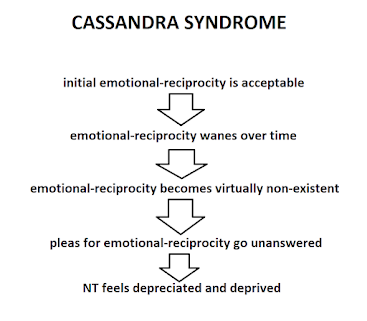
 But eventually, after years of carrying the emotional weight of the relationship alone, something begins to break inside them. They become tired of initiating every difficult conversation. They become exhausted from constantly explaining basic emotional needs that never seem to fully register. They feel increasingly unseen while managing the emotional atmosphere of the home, the planning, the communication, the social coordination, and often the relational stability of the family itself. Over time, many wives begin feeling less like partners and more like emotional caretakers.
It is often in this state of exhaustion that the phrase “man-child” quietly enters their thinking. Most wives do not use the term casually or maliciously. In fact, many feel guilty for even thinking it. They know their husband may be intelligent, hardworking, loyal, morally sincere, and genuinely well-intentioned. They may know he loves them in his own way. Yet despite these strengths, the marriage often feels profoundly unequal emotionally. The wife experiences herself as carrying the burden of emotional adulthood for two people, and over time resentment begins replacing compassion.
This is where many Cassandra wives become trapped in a painful emotional contradiction. On one hand, they recognize that their husband is not intentionally cruel. On the other hand, the emotional neglect feels devastatingly real. The loneliness, confusion, and emotional deprivation accumulate year after year until the wife no longer knows how to reconcile the husband she intellectually respects with the emotional reality she experiences inside the marriage.
One of the most misunderstood aspects of autism in adults is that development is frequently asynchronous. In other words, different areas of development mature at dramatically different rates. An autistic husband may possess extraordinary cognitive strengths while simultaneously struggling in areas related to emotional regulation, executive functioning, emotional awareness, flexibility, relational responsiveness, or nervous system recovery. Intellectual maturity and emotional maturity do not always develop evenly in autism, and this creates enormous confusion inside intimate relationships.
A husband may appear exceptionally competent in professional environments while becoming emotionally overwhelmed during conflict at home. He may excel in analytical thinking yet struggle to anticipate emotional needs or interpret relational nuance. He may sound highly articulate and intelligent in structured conversations while becoming avoidant, rigid, or shut down during emotionally vulnerable interactions. To many wives, these contradictions feel impossible to reconcile. They wonder how someone who appears so intelligent can simultaneously seem so emotionally underdeveloped.
That question becomes one of the deepest wounds in many neurodiverse marriages because most people unconsciously assume that intelligence automatically translates into emotional competence. Society teaches us that if someone is articulate, professionally successful, and intellectually capable, they should also understand emotional reciprocity, empathy, and mature communication. But autism often exposes the reality that these neurological systems are not the same. The brain systems responsible for analytical reasoning are not identical to the systems responsible for emotional attunement, executive functioning, social intuition, or relational regulation.
Many Cassandra wives spend years unknowingly interpreting neurological limitations as moral failures. This distinction matters more than most people realize because once behavior is interpreted morally, resentment intensifies rapidly. The wife begins believing that if her husband truly cared, he would naturally know how to emotionally show up for her. Yet many autistic husbands are not withholding emotional connection intentionally. Often, they genuinely do not understand the depth of emotional absence their spouse experiences.
 One of the deepest wounds in Cassandra syndrome is not simply loneliness itself, but the feeling of being emotionally unseen inside the marriage. Many wives describe a relationship in which their husband physically exists in the home while feeling psychologically unavailable. Conversations remain surface-level. Emotional bids for connection are missed or misunderstood. Vulnerability is met with problem-solving instead of emotional comfort. Emotional pain is analyzed logically rather than emotionally held. Over time, the wife begins feeling emotionally starved while simultaneously being made to feel that her needs are excessive or unreasonable.
This often creates profound self-doubt. Many wives begin questioning whether they are too emotional, too demanding, or too needy. They wonder why they feel so profoundly alone despite being married. They become confused by the discrepancy between their husband’s ability to focus intensely on work, hobbies, routines, or intellectual interests while appearing disconnected from the emotional reality of the relationship. Because the neglect feels selective, it becomes deeply personal.
What many neurotypical spouses do not initially realize is that structured environments are often neurologically easier for autistic individuals than emotionally dynamic environments. Work settings frequently contain clearer expectations, repetitive systems, defined roles, and more predictable social rules. Marriage, by contrast, requires constant emotional interpretation, flexibility, perspective-taking, co-regulation, ambiguity tolerance, and adaptation to another person’s internal emotional world. These demands are neurologically exhausting for many autistic nervous systems.
This does not mean wives should simply tolerate emotional neglect indefinitely. The pain is real. Emotional deprivation inside a marriage can deeply wound the nervous system over time. But understanding the neurological framework often helps explain why the emotional disconnection feels so persistent and confusing. Many autistic husbands are not refusing emotional intimacy in the consciously selfish way their wives initially assume. Instead, they may be navigating chronic overwhelm, emotional blindness, executive dysfunction, social fatigue, sensory overload, and relational confusion simultaneously.
Many autistic adults spend enormous amounts of energy masking throughout the day. They consciously monitor facial expressions, tone of voice, conversation timing, workplace expectations, sensory discomfort, and social performance in ways that neurotypical individuals often do automatically. By the time they come home, their nervous system may already be depleted. Unfortunately, the home environment frequently becomes the place where regulation collapses.
This creates one of the most painful dynamics in neurodiverse marriage. The wife waits all day for emotional connection, partnership, or responsiveness, only to encounter withdrawal, shutdown, irritability, distraction, or emotional flatness instead. Naturally, this feels deeply rejecting. Many wives begin feeling as though the outside world receives the best version of their husband while they receive whatever remains after his nervous system is exhausted.
Over time, many Cassandra wives begin living in a state of chronic emotional hypervigilance. Some overfunction and become excessively responsible because they unconsciously realize the relationship cannot emotionally stabilize otherwise. Others become controlling, anxious, emotionally detached, depressed, or chronically resentful. Many begin carrying the emotional atmosphere of the home almost entirely by themselves because they no longer trust that their husband can consistently co-regulate emotionally with them.
The “man-child” label typically emerges only after years of accumulated depletion. It often appears when the wife realizes she has slowly become the emotional manager, executive functioning assistant, conflict initiator, household organizer, social coordinator, and nervous system stabilizer within the relationship. At some point, she no longer feels like a romantic partner. She feels like a caretaker.
Once this dynamic develops, attraction frequently begins deteriorating. Maternal energy and romantic energy are difficult to sustain simultaneously. A wife may still deeply love her husband while feeling emotionally exhausted by him. This contradiction creates enormous guilt, especially because many autistic husbands are not intentionally manipulative or malicious. Many genuinely feel confused about why the relationship feels so painful for their spouse despite their efforts to provide financially, remain loyal, or avoid conflict.
At this point, many Cassandra wives fear that understanding autism means minimizing or excusing their suffering. It does not. Explaining a behavior neurologically is not the same thing as approving of its impact. Emotional neglect still damages marriages regardless of intent. Chronic loneliness still affects the nervous system profoundly. Lack of emotional reciprocity still creates grief, confusion, and attachment injuries.
However, understanding asynchronous development allows couples to move away from moral condemnation and toward more accurate intervention. Shame rarely produces sustainable emotional growth. In fact, many autistic husbands become more overwhelmed, avoidant, defensive, or emotionally collapsed when repeatedly labeled selfish, childish, lazy, or defective. A nervous system operating under chronic shame often regresses rather than matures.
 |
| Cassandra Journal |
Healing in neurodiverse marriage rarely begins with one dramatic breakthrough conversation. More often, it begins with reframing. The wife slowly begins realizing that what she interpreted as intentional rejection may in part reflect neurological limitations she did not previously understand. Simultaneously, the husband begins recognizing that his nervous system differences affect his spouse more deeply than he realized.
Once both partners develop language for what is actually happening, the emotional atmosphere can begin changing. Instead of viewing the situation solely through the lens of character flaws, couples begin recognizing the role of emotional regulation difficulties, executive dysfunction, sensory overload, nervous system exhaustion, and relational processing differences. This shift does not magically erase the pain, but it often creates enough clarity for more effective strategies to emerge.
Some couples begin implementing structured communication systems, scheduled emotional check-ins, therapy focused specifically on neurodiverse dynamics, sensory regulation practices, conflict scripts, or executive functioning supports. Some wives begin learning how to stop compulsively overfunctioning. Some husbands begin intentionally studying emotional intelligence rather than assuming emotional connection should happen automatically.
For many Cassandra wives, one of the most healing moments occurs when they finally realize they are not crazy for feeling emotionally deprived. Their pain is real. Their loneliness is real. Their longing for emotional connection is entirely valid. Wanting emotional responsiveness does not make someone needy. Wanting reciprocity is part of healthy human attachment.
At the same time, many autistic husbands are struggling with neurological limitations they themselves may not fully understand. What appears to be indifference is sometimes overwhelm. What appears to be emotional avoidance is sometimes shutdown. What appears to be passivity is often executive dysfunction combined with chronic shame and nervous system fatigue.
Understanding this does not erase the impact on the wife. But sometimes it softens the resentment just enough for clarity to emerge. And clarity matters because many Cassandra wives have spent years blaming themselves for dynamics that were neurological all along. Sometimes that realization becomes the beginning of rebuilding the relationship. Sometimes it becomes the beginning of grieving the relationship more accurately. But either way, understanding the truth more clearly often becomes the first step toward healing.
 |
| Mark Hutten, M.A. |
Pick Your Preferred Day/Time
Available Classes with Mark Hutten, M.A.:
==> Cassandra Syndrome Recovery for NT Wives <==
==> Online Workshop for Men with ASD level 1 <==
==> Online Workshop for NT Wives <==
==> Online Workshop for Couples Affected by Autism Spectrum Disorder <==
==> ASD Men's MasterClass: Social-Skills Emotional-Literacy Development <==
Individual Zoom Call:
==> Life-Coaching for Individuals with ASD <==
Downloadable Programs:
==> eBook and Audio Instruction for Neurodiverse Couples <==