What Hope Really Looks Like When You're Married to Someone with Autism

If you've been married to someone on the autism spectrum for years, the word hope may carry mixed emotions. Perhaps there was a time when hope came easily. You believed that with enough love, patience, communication, or counseling, your marriage would eventually become the emotionally connected relationship you longed for. You may have told yourself that if you could just explain your feelings one more time, your husband would finally understand the depth of your loneliness. You believed that if he could truly see your heart, everything would change.
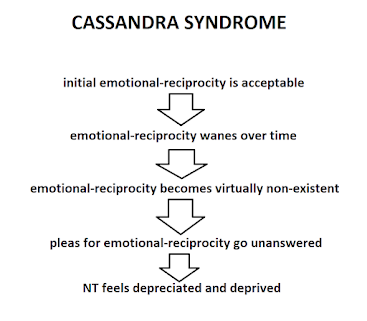
But after years of repeated misunderstandings, emotional disconnect, and unmet needs, hope can begin to feel dangerous. It becomes easier to expect disappointment than to risk believing things might improve. Many wives experiencing Cassandra syndrome eventually stop dreaming about what could be because every disappointment feels like another confirmation that they are alone. When you've spent years reaching for emotional connection that rarely arrives in the way you need it, protecting yourself by lowering your expectations can seem like the only way to survive.
Yet there is another kind of hope—one that is far stronger than wishful thinking. It is not built upon denying reality or pretending your marriage is easier than it is. Instead, it grows from understanding that your healing does not have to wait for someone else to change. This kind of hope allows you to face your circumstances honestly while still believing that your future can hold peace, joy, and purpose.
One of the greatest misconceptions about hope is that it depends entirely on your spouse making significant changes. Many wives unknowingly spend years waiting. They wait for their husband to become more emotionally expressive, more empathic, more responsive, or more aware of how his words and actions affect them. Waiting often feels productive because it is fueled by love and optimism. Unfortunately, when all of your emotional well-being depends on another person's growth, your own life becomes suspended. Every difficult interaction reinforces the belief that happiness must remain just out of reach until your spouse finally understands.
Real hope looks different. It gently shifts your focus away from what you cannot control and back toward what you can. Rather than asking, "When will he change?" hope begins asking, "What would healing look like for me today?" That subtle shift changes everything. It does not require giving up on your marriage or abandoning the possibility that your husband can grow. Instead, it recognizes that your emotional health is too valuable to place entirely in another person's hands.
For many wives, one of the first signs of healing comes when they stop questioning their own reality. Living in an emotionally disconnected marriage often creates profound self-doubt. You may have spent years wondering whether you were too sensitive, too needy, or expecting too much. Friends, family members, or even counselors who do not fully understand neurodiverse relationships may unintentionally reinforce those doubts by suggesting you simply need to communicate differently or lower your expectations. Over time, you may begin to distrust your own emotions.
Understanding autism often provides an important piece of the puzzle. It helps explain why emotional communication can be so difficult and why misunderstandings happen repeatedly. However, explanation should never become invalidation. Recognizing that autism influences your husband's behavior does not erase your pain. Your loneliness remains real. Your disappointment remains real. Your desire for emotional closeness is not excessive or unreasonable simply because your spouse struggles to provide it consistently. Healing begins when you give yourself permission to acknowledge your experience without apologizing for it.
Years of emotional uncertainty affect far more than your thoughts. They shape your nervous system as well. Many wives living with Cassandra syndrome find themselves existing in a constant state of vigilance. Their bodies become accustomed to anticipating disappointment, criticism, or emotional isolation. Even ordinary conversations may trigger anxiety because previous experiences have taught them that attempts at connection often end in misunderstanding. Over time, chronic stress can contribute to exhaustion, insomnia, depression, physical tension, and a growing sense of emotional numbness.
This is why healing cannot focus solely on improving communication within the marriage. Your nervous system needs healing too. Hope includes learning to care for your body with the same compassion you have spent years extending toward everyone else. Regular exercise, time in nature, meaningful friendships, prayer, meditation, adequate rest, creative pursuits, and simple moments of quiet all help teach your nervous system that safety still exists. These practices do not remove every marital challenge, but they strengthen your ability to remain emotionally grounded even when those challenges continue.
Another surprising aspect of healing is rediscovering the parts of yourself that have gradually disappeared. Many wives become so focused on managing the relationship that they unknowingly place their own dreams, friendships, interests, and personal growth on hold. Their entire emotional world begins revolving around the marriage. Every conversation is analyzed. Every disappointment is replayed. Every bit of emotional energy becomes devoted to trying to make the relationship work.
Hope invites you to reclaim your life without abandoning your marriage. It asks different questions than fear does. Instead of constantly wondering how to finally help your husband understand your needs, you begin asking what activities make you feel alive, which friendships nourish your spirit, and what gifts or passions have been quietly waiting for your attention. These questions are not selfish. They remind you that you are a whole person with a life that deserves to flourish regardless of the pace at which your marriage changes.
This shift often creates an unexpected outcome. Ironically, when you stop making your spouse solely responsible for your emotional well-being, the relationship itself frequently becomes healthier. Your husband no longer carries the impossible burden of meeting every emotional need, and you become less reactive because your sense of stability is no longer entirely dependent on each interaction. This does not solve every problem, but it often creates space for calmer communication, greater patience, and more realistic expectations on both sides.
It is also important to acknowledge that many autistic husbands genuinely love their wives. They may desperately want to be better partners while lacking the intuitive understanding of emotional communication that comes naturally to many neurotypical people. Some make remarkable progress once they recognize how autism affects the relationship and begin intentionally learning new skills. Others improve more gradually over many years. Still others continue to struggle despite sincere effort. Real hope makes room for every one of these possibilities without tying your emotional future to any single outcome.
Healing rarely arrives in dramatic moments. More often, it reveals itself quietly. You may notice that you recover more quickly after difficult conversations. You stop replaying every disagreement late into the night. You trust your own perceptions instead of constantly seeking reassurance from others. You establish healthy boundaries without feeling guilty. You reconnect with old friends, discover new interests, laugh more often, and experience moments of peace that once seemed impossible. Little by little, your identity expands beyond the role of someone simply trying to survive a difficult marriage.
Perhaps the most beautiful discovery is that healing changes your relationship with yourself. You begin treating your own heart with the same compassion you have offered everyone else. You recognize that your worth is not determined by how emotionally understood you feel on any particular day. You become stronger, not because life has become easy, but because you have learned to stop abandoning yourself in the pursuit of someone else's approval or understanding. This quiet confidence often becomes the foundation upon which genuine peace is built.
If you are reading this today while feeling emotionally exhausted, remember that hope is not pretending your marriage is perfect. Hope is not denying the reality of loneliness or minimizing the challenges that autism can bring into a relationship. Genuine hope is choosing to believe that your story is larger than your present pain. It is trusting that healing can begin today, even if your circumstances remain imperfect. Every small act of self-care, every healthy boundary, every supportive friendship, every moment of self-compassion, and every step toward emotional health becomes evidence that your life is moving forward.
Your marriage may continue to evolve. Your husband may grow in ways neither of you expected. Or the changes may come more slowly than you wish. Regardless of what the future holds, your healing does not have to wait. You are not defined by what has been missing in your relationship. You are defined by the resilience, courage, and hope that continue to carry you forward. That kind of hope is not fragile. It grows stronger with every step you take toward becoming the healthy, peaceful, and wholehearted woman you were always meant to be.
 |
| Mark Hutten, M.A. |
Pick Your Preferred Day/Time
Available Classes with Mark Hutten, M.A.:
==> Cassandra Syndrome Recovery for NT Wives <==
==> Online Workshop for Men with ASD level 1 <==
==> Online Workshop for NT Wives <==
==> Online Workshop for Couples Affected by Autism Spectrum Disorder <==
==> ASD Men's MasterClass: Social-Skills Emotional-Literacy Development <==
Individual Zoom Call:
==> Life-Coaching for Individuals with ASD <==
Downloadable Programs:
==> eBook and Audio Instruction for Neurodiverse Couples <==