Finding Myself Again: A Story of Healing by Janice D. (one of Mark Hutten's clients)

The Questions That Started My Healing
1. “When did I realize that my happiness was my job—not my ASD husband’s?”
I realized it on an ordinary Tuesday, standing at the kitchen sink, feeling completely empty. I had spent years waiting for him to notice me, validate me, reassure me. I thought if he changed—if he softened, if he understood—I would finally feel okay.
But that day, it hit me: he wasn’t withholding happiness from me—I was handing it over. My healing began when I stopped waiting and started choosing myself, one small act at a time.
2. “Why did I feel so lonely even though I was married?”
Because I was emotionally alone.
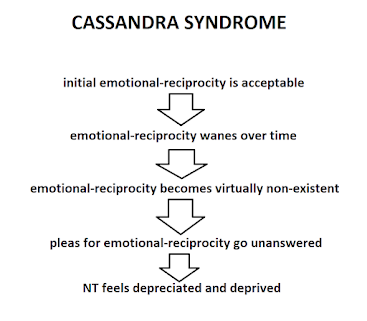
We lived under the same roof, shared responsibilities, raised children—but there was no emotional reciprocity. No curiosity about my inner world. No shared emotional language.
I learned that loneliness isn’t about being alone—it’s about being unseen. Naming that truth was painful, but it was also validating.
3. “How did I lose trust in my own perceptions?”
It happened slowly.
Every time I brought up a concern and was told I was “too sensitive,” “imagining things,” or “overreacting,” I doubted myself a little more. Eventually, I stopped checking in with me and started checking in with him to see what reality was allowed to be.
Recovery meant reclaiming my right to interpret my own experience.
4. “When did I stop feeling like a wife and start feeling like a problem?”
When every unmet need was framed as a flaw in me.
I wasn’t asking for extravagance—I was asking for empathy, connection, warmth. But those requests were treated like unreasonable demands. Over time, I internalized the idea that I was the issue.
Healing meant separating my worth from his limitations.
5. “Why did I keep explaining myself over and over?”
Because I believed that if I just found the right words, he would finally understand.
What I didn’t realize was that this wasn’t a communication issue—it was a capacity issue. No amount of explaining can create emotional attunement where it doesn’t exist.
Letting go of that exhausting cycle was one of the most freeing moments of my life.
6. “What finally made me stop chasing emotional breadcrumbs?”
Exhaustion.
I was tired of celebrating crumbs as if they were meals. A brief apology. A rare compliment. A moment of engagement.
I asked myself, Is this what love is supposed to feel like? And my body answered before my mind could: No.
7. “Why did I feel guilty for wanting more?”
Because I had been conditioned to minimize myself.
I was told he “couldn’t help it,” that I needed to be more understanding, more patient, more forgiving. And I tried. I tried until there was nothing left of me.
Recovery meant understanding that compassion for him didn’t require abandonment of myself.
8. “When did I realize I was emotionally starving?”
When someone else listened to me—really listened—and I almost cried from the shock of it.
That’s when I knew: I had been surviving on emotional deprivation for years and calling it marriage.
9. “How did I confuse loyalty with self-betrayal?”
I thought staying silent was strength.
I thought enduring was love.
But loyalty that requires erasing yourself isn’t loyalty—it’s self-abandonment. Learning that distinction changed everything.
10. “Why was I always the one doing the emotional labor?”
Because I had the capacity—and he didn’t.
And instead of acknowledging that imbalance, I kept compensating for it. I carried the relationship emotionally, mentally, relationally.
Healing meant setting down burdens that were never mine to carry alone.
11. “What did grief look like in my recovery?”
It wasn’t loud. It was quiet and heavy.
I grieved the marriage I thought I had. The future I imagined. The version of myself that believed love would eventually arrive if I tried harder.
Letting myself grieve without judgment was essential.
12. “How did I start rebuilding my identity?”
I started small.
I asked myself what I liked. What I needed. What brought me peace.
For a long time, I had only existed in relation to him. Recovery meant becoming a whole person again.
13. “What boundaries saved my sanity?”
The boundary that said: I will no longer explain my pain to someone committed to misunderstanding it.
That single decision preserved my energy and restored my dignity.
14. “When did I stop hoping he would change?”
When I realized that hope had become a prison.
Letting go of hope didn’t make me bitter—it made me free. I stopped waiting for permission to live fully.
15. “What does healing look like now?”
Healing looks like self-trust.
It looks like calm instead of chaos.
It looks like choosing relationships—romantic or otherwise—where my emotions are welcomed, not tolerated.
Most of all, healing looks like coming home to myself.
🌱 Closing Message to Listeners
If any of these questions sounded like your own thoughts, please know this:
You are not broken.
You are not “too much.”
And you are not alone.
Your recovery begins the moment you stop questioning your worth—and start honoring your truth.
==> Cassandra Syndrome Recovery for NT Wives <==
 |
| Mark Hutten, M.A. |
Pick Your Preferred Day/Time
Available Classes with Mark Hutten, M.A.:
==> Cassandra Syndrome Recovery for NT Wives <==
==> Online Workshop for Men with ASD level 1 <==
==> Online Workshop for NT Wives <==
==> Online Workshop for Couples Affected by Autism Spectrum Disorder <==
==> ASD Men's MasterClass: Social-Skills Emotional-Literacy Development <==
Individual Zoom Call:
==> Life-Coaching for Individuals with ASD <==
Downloadable Programs:
==> eBook and Audio Instruction for Neurodiverse Couples <==